 English
 Français
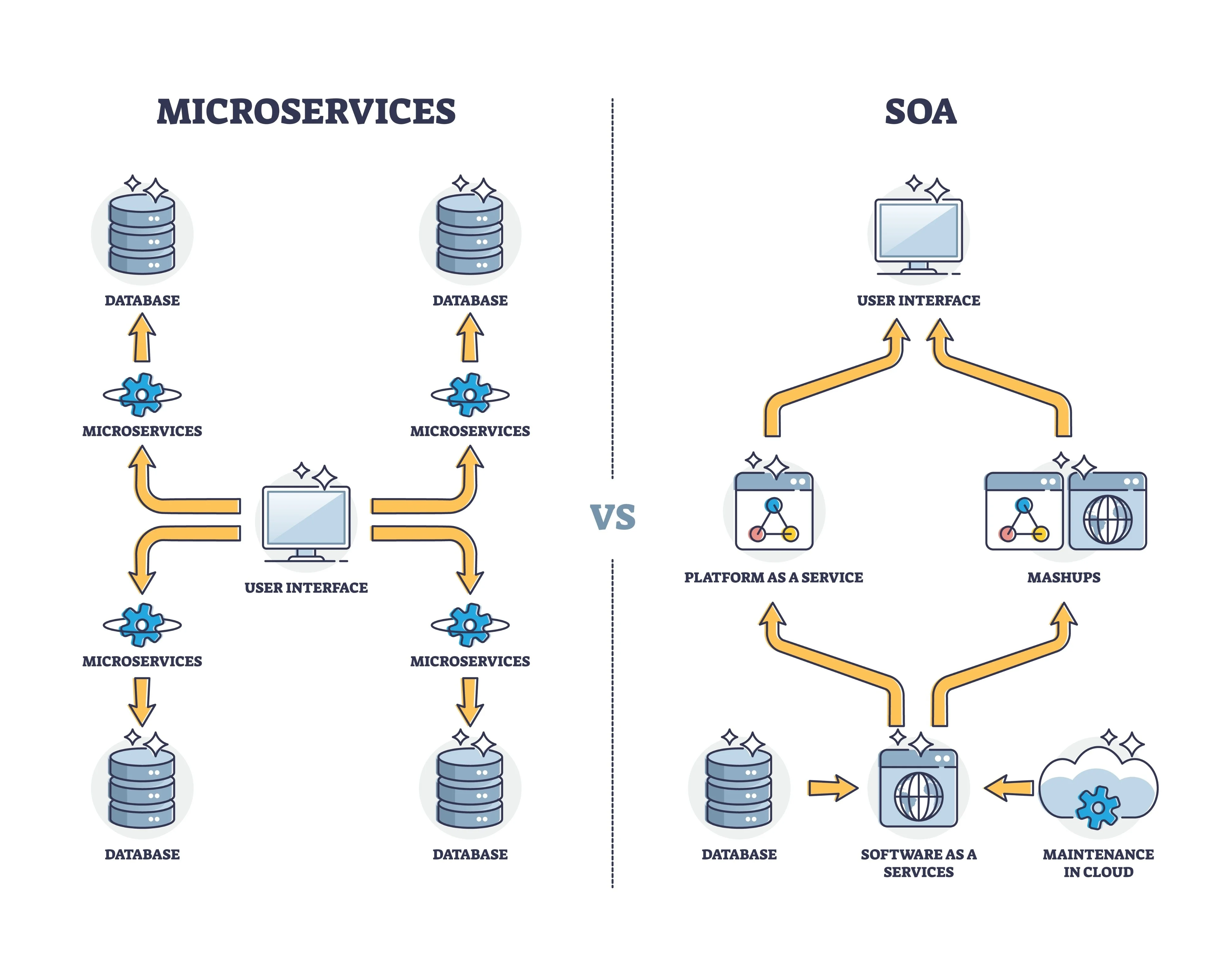
In the modern development landscape, the "default" for many scaling companies has become the decoupled architecture—a React or Angular frontend communicating with a Django REST Framework (DRF) backend. While this has its place, many growing corporate groups are discovering a hidden "complexity tax" that drains budgets and slows down innovation.
At BrightStack Solutions, we are increasingly seeing the competitive advantage of Architectural Consolidation. By moving back to a Unified (Monolithic) Django architecture, businesses are reclaiming their speed and reducing their overhead without sacrificing performance.
The Problem: The Hidden "Complexity Tax" of Over-Engineering
Many technical leaders opt for a decoupled stack because it is "industry standard." However, for most business-critical applications—from internal corporate tools to legal tracking systems—this separation introduces significant friction:
- Authentication Overhead : Managing JWTs, cross-origin resource sharing (CORS), and keeping sessions in sync across two distinct environments.
- Latency & Payload Issues : Every request between a decoupled frontend and backend adds a layer of network overhead.
- Deployment Fragility : Orchestrating two separate CI/CD pipelines, two sets of environment variables, and ensuring version compatibility between the API and the UI.
- The Talent Gap : You no longer need a "Fullstack Engineer"; you need specialized Frontend and Backend devs who must constantly coordinate on API contracts.
The Solution: Leveraging Django’s Unified Strengths
A Unified Django architecture (using Django Templates or modern libraries like HTMX) removes these barriers. It allows the server to handle the heavy lifting while serving a dynamic, modern UI.
Why this works for scaling :
- Shared Context : Your authentication, permissions, and data models live in one place. No more API contract disputes.
- Simplified Security : You leverage Django’s built-in, battle-tested CSRF protection and session management natively.
- Rapid Prototyping : Features that take weeks in a decoupled environment can often be shipped in days when the UI and logic are tightly integrated.
The Proof: Speed, Security, and Maintenance
When we look at the ROI of this shift, the numbers speak for themselves:
- Deployment Speed : We’ve seen companies reduce their deployment time by 40% by consolidating into a single Dockerized container managed via GitLab CI/CD.
- Maintenance Costs : Fewer moving parts mean fewer points of failure. Simplified VPS management and SSL implementation lead to a direct reduction in DevOps billable hours.
- Performance : By utilizing Django’s native caching and server-side rendering, initial page loads are often faster than heavy JavaScript bundles.
The Verdict: When to Consolidate?
Architectural consolidation isn't about moving backward; it’s about moving smarter. If your digital product requires high security, rapid feature iterations, and a lean engineering team, a Unified Django stack is your most scalable asset.
At BrightStack Solutions, we specialize in building these robust, "Unified" architectures for European and international corporate groups who value ROI as much as they value clean code.
Ready to Audit Your Current Stack?
Is over-engineering slowing down your product roadmap? Let’s discuss how consolidating your architecture can accelerate your growth.
Book a 15-Minute Technical Strategy Session
— Sami Mezghenni Founder, BrightStack Solutions